The History of Hull Fair: 700 Years from Medieval Charter to Walton Street
From a 13th-century royal charter to one of Europe's largest travelling fairs: the full story of Hull Fair, where it began, how it moved, and why it keeps coming back.
Where it all began: the royal charters
Hull Fair is one of the oldest surviving fairs in Europe, with a documented history stretching back to the late thirteenth century. The earliest records connect the fair to a series of royal charters granted during a period when the town on the Humber was transforming from a small trading port into a significant English town.
In 1279, when the settlement was still known as Wyke upon Hull, a charter granted on 10 November permitted an annual fair. A further charter in 1293 — when King Edward I had taken possession of the town, renamed it Kingston upon Hull, and formally laid out its streets — established a fair lasting six weeks, held in late spring and early summer. These early fairs were first and foremost commercial events: livestock, cloth, salt fish, rope, ironwork, and produce from the Humber and beyond were traded across what had become an important North Sea port.
The fair was not simply entertainment. For medieval towns, a chartered fair represented economic privilege — a sanctioned window in which merchants from across England and the Continent could legally buy and sell goods without local guild restrictions. Hull's status as a royal town and port gave its fair particular importance.
Early locations: the Market Place and beyond
For centuries the fair moved around the town as Hull grew. Its earliest incarnations were held near the Market Place, behind Holy Trinity Church (now Hull Minster), and along the waterfront area around Wellington Street and Nelson Street, close to the piers where goods from Mediterranean and Baltic ships were unloaded.
As the fair evolved from a trading event into a mix of commerce and entertainment — jugglers, animal shows, musicians, and early mechanical novelties were gradually introduced — it needed more open space. In the eighteenth century it was held on open ground outside the town walls known as the Brown Cow fields. By 1865 the fair had moved to the Corporation Fields on Park Street, but that site proved too noisy for nearby residents and too small for a fair that was growing rapidly.
The calendar riots of 1752
One of the most vivid episodes in Hull Fair's history stems not from the fairground itself but from a political act in Westminster. When Britain adopted the Gregorian calendar in September 1752, eleven days were removed from the calendar overnight. Ordinary people who feared their fair days — and therefore their livelihoods — would be shortened took to the streets in Hull and elsewhere, demanding: "Give us back our eleven days!"
The protest was effective. Hull Fair was shifted to align with the pre-change calendar, which is why it now opens on the Friday nearest to 11 October rather than the late spring or early summer dates of its original charters. The calendar change is the reason Hull Fair falls in autumn, making it inseparably associated with October evenings, falling leaves, and cold Humber air.
The move to Walton Street: 1888
The modern era of Hull Fair begins in 1888, when the fair was moved to its current home on Walton Street, in the area of West Hull adjacent to what is now West Park. The original site covered eight acres — enormous for a travelling fair but already straining under the demand of showmen wanting pitches.
In 1906 the site was doubled in size, bringing Walton Street to the scale that visitors recognise today. By this point Hull Fair was firmly entertainment-led rather than trade-led: mechanical rides, steam-powered attractions, freak shows, and travelling theatres had replaced the livestock and cloth merchants of the medieval fair.
The pomegranates that remain one of the most distinctive Hull Fair traditions have their own story rooted in the port. As Mediterranean ships unloaded their autumn cargoes at Hull Docks, showmen and traders had access to seasonal exotic fruit that was rare and expensive away from a major port. Pomegranates, sold with pins so that fairgoers could eat the seeds on the spot, became one of Hull Fair's most unusual and enduring traditions — a reminder that the fair was always bound up with Hull's identity as a port city open to the world.
The fair that would not die: wartime closures
Hull Fair has been suspended only a handful of times in its long history, and each suspension reflects a national crisis rather than any local failure of will.
During the First World War the fair continued in 1914 but was suspended from 1915 onward. Hull Corporation's Markets Committee confirmed in July 1915 that no contracts had been signed and that wartime lighting restrictions — the Walton Street site was too exposed to be lit safely against enemy observation — made operation impossible after dark.
The Second World War brought a longer suspension, from 1939 to 1945. The Walton Street site was not left idle during these years: it served as a mooring point for barrage balloons defending Hull against Luftwaffe bombing raids, as a military vehicle park, and as a tank training ground. Hull was one of the most heavily bombed British cities outside London, and the Walton Street area bore its share of the damage. When the fair returned in 1945 and again in full vigour in 1946, the celebrations were felt across a city that had been through years of destruction.
In 1944, showman Billy Butlin — later founder of the Butlin's holiday camps — proposed an amusement park for Hull using blackout-compliant marquees on a bomb site near the city centre, aiming to boost morale during the Blitz. The short-lived "Blackout Amusement Park" was approved and opened, but closed in September 1944 following a fire. It stands as a measure of how much Hull residents missed their annual fair.
The modern fair and COVID-19
In the decades after the Second World War, Hull Fair resumed as an unbroken autumn tradition. The Showmen's Guild of Great Britain, which represents the travelling showmen and their families who run the fair, works with Hull City Council to ensure the event happens every year. The guild families who operate the major rides and stalls are often third, fourth, or fifth-generation fairground operators, and many of the named attractions — Wright's brandy snaps, Bob Carver's patties — represent multi-generational family businesses.
The fair's only modern cancellation came in 2020, when the COVID-19 pandemic made a mass public gathering on Walton Street impossible. It was the first time in the post-war era that the fair had been cancelled outright. When Hull Fair returned in October 2021, the queues along Anlaby Road and the noise from Walton Street announced something that Hull had genuinely missed.
Hull Fair today
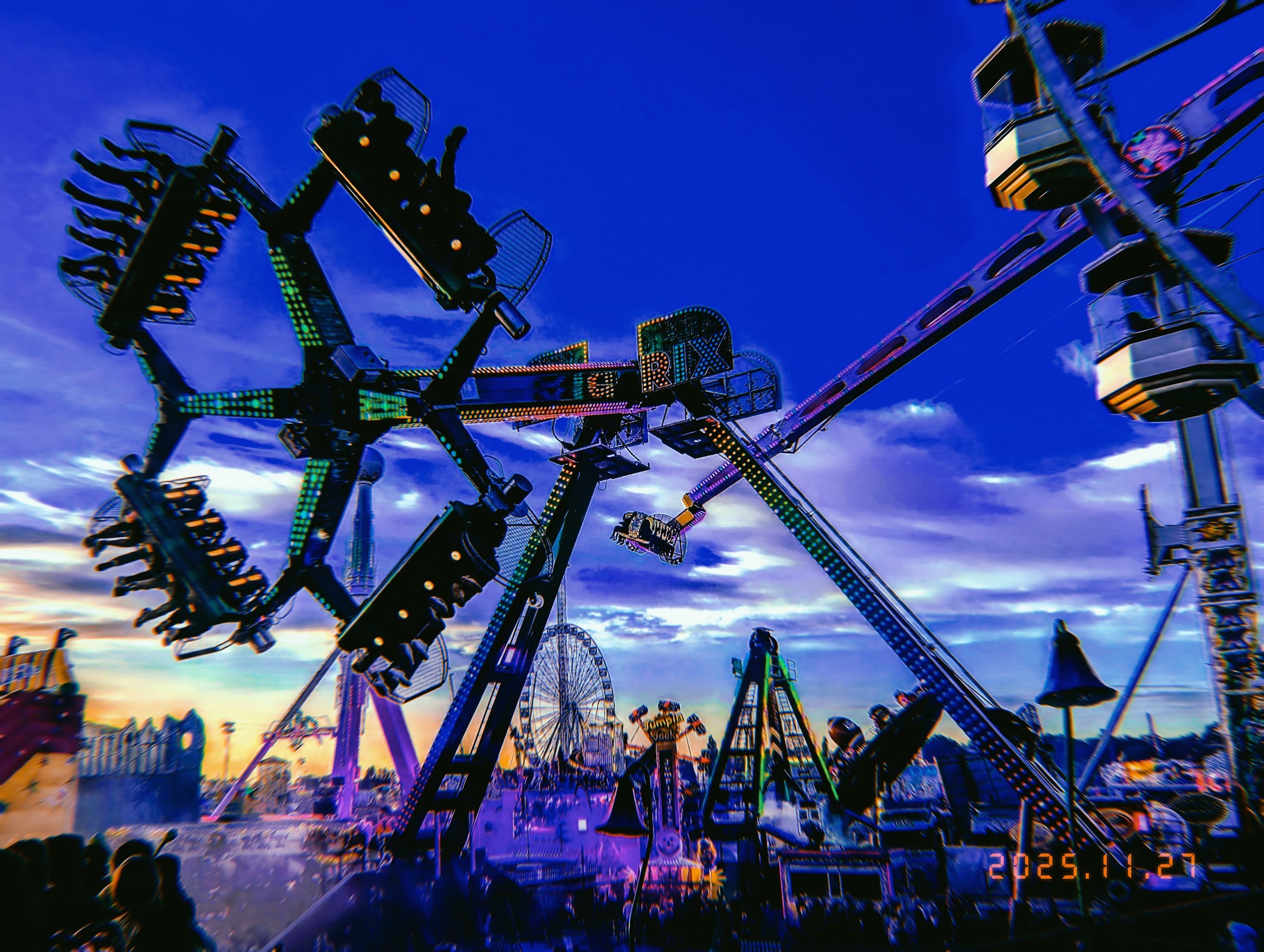
Hull Fair now occupies the same Walton Street footprint established in 1906. Hull City Council describes it as one of Europe's largest travelling fairs, with more than 250 rides on site alongside hundreds of food, game, and novelty stalls. The fair opens on the Friday nearest to 11 October — a schedule anchored to the calendar protests of 1752 — and runs for nine days, closed on Sunday by an old charter rule against Sunday trading.
In 2026, Hull Fair runs from Friday 9 October to Saturday 17 October, closed on Sunday 11 October. Admission to the Walton Street site remains free, as it has been for generations. Rides, games, food, and stalls are priced individually by their operators.
After more than 700 years, the fair is still built on the same idea that powered the original charters: gather people together in one place, in autumn, and give them a reason to spend an evening on Walton Street. The medieval king who signed the 1293 charter would recognise the impulse, even if the fifty-metre drop towers would likely surprise him.